


Why Fresh Pasta is Better: The Secret to Authentic Italian Dining in Exeter (2026)
- Medhat Awad

- 6 days ago
- 13 min read
Approximately 48% of UK consumers now prioritize quality and freshness over shelf life when choosing their next meal, yet many still wonder if the upgrade is truly worth it. You've likely felt that familiar disappointment when a store-bought "fresh" pasta turns into a gummy mess in your kitchen, leaving you confused by terminology and unsure of which sauce belongs with which shape. It's easy to assume that all pasta is created equal, but once you experience the delicate, silky texture of a hand-crafted dish, the secret of why fresh pasta is better becomes impossible to ignore.
We believe every guest deserves to feel like part of our extended family, sharing in the pride we take in our cultural roots. This guide will reveal the culinary science behind superior pasta, focusing on the technical benefits of egg-based doughs and the specific porosity that allows sauces to cling perfectly. You will discover how these textures elevate dishes like Spaghetti Carbonara or Lasagne Al Forno from simple comfort food to a sophisticated gastronomic event. We will walk you through the art of perfect pairings and artisanal heritage, ensuring you feel like a confident foodie the next time you dine with us along the scenic Exeter Quay.
Key Takeaways
Discover how high-protein "00" flour and fresh eggs create a uniquely porous texture that grips sauce for a more flavorful bite.
Gain insight into why fresh pasta is better for rich, delicate cream or butter-based sauces that require a silken, elegant touch.
Learn to navigate a traditional Italian menu by matching the weight of your pasta shape to the intensity of the ingredients.
Understand the artisanal craft behind "le venature," which are the essential surface veins that distinguish hand-crafted dough from mass-produced alternatives.
Identify the markers of quality that define an authentic dining experience at local heritage establishments like Venezia on the Exeter Quay.
Table of Contents
Defining Fresh Pasta: More Than Just "Un-Dried" Dough
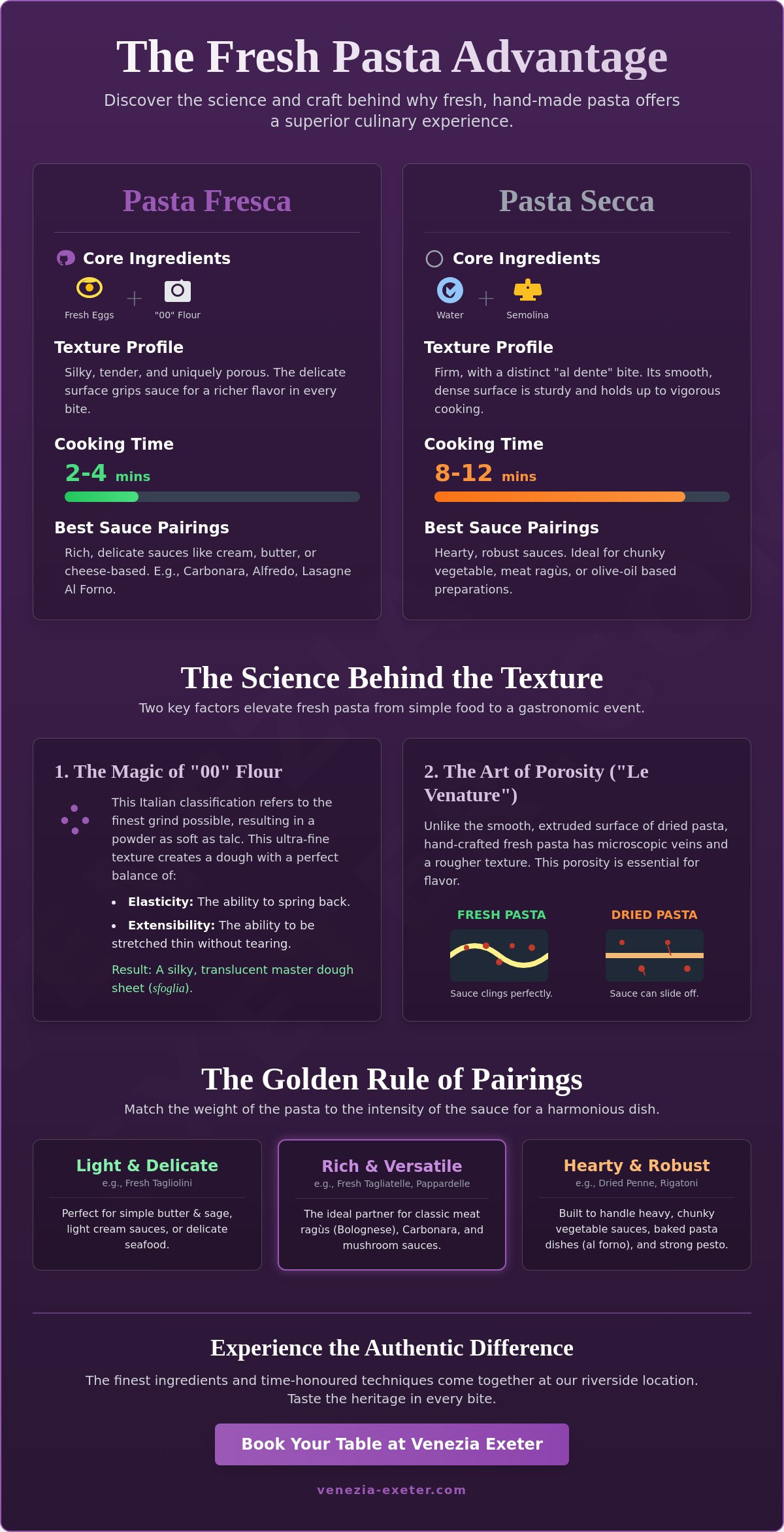
Step into any kitchen where the air is lightly dusted with flour and the scent of rich grain lingers, and you'll find the heart of Italian heritage. While many diners view pasta as a single category, the distinction between Pasta Fresca and Pasta Secca is fundamental to the culinary experience. Understanding what is fresh pasta begins with the humble yet precise list of ingredients. Unlike the dried variety made from durum wheat semolina and water, authentic fresh pasta is a luxurious marriage of high-protein flour and whole eggs. This combination creates a dough that is vibrant in color and remarkably tender to the touch.
Because it hasn't been dehydrated for long-term storage, fresh pasta is a living product. It requires immediate refrigeration and carries a fleeting shelf life, often lasting only a few days before it loses its character. This perishable nature is exactly why fresh pasta is better for those seeking a meal that feels intentional and vibrant. At the center of this craft is the sfoglia, the master sheet of dough. It is rolled out with immense patience until it is translucent enough to see through, yet strong enough to hold its shape. This golden sheet serves as the canvas for everything from delicate ribbons of noodles to the robust, comforting layers found in our Lasagne Al Forno.
The Ingredient Profile: Eggs vs. Water
The secret to that signature silken mouthfeel lies in the fat content of the eggs. While dried pasta relies on water to bind the semolina, fresh dough uses the richness of the yolk to create a supple texture that can be rolled paper-thin without tearing. High-end kitchens often avoid adding water to their fresh dough entirely. This prevents the pasta from becoming mushy or waterlogged during its incredibly brief cooking time. Instead, you get a bite that is soft yet resilient, designed to harmonize with the flavors of the sauce rather than just carrying them.
Fresh Pasta in Professional Kitchens
There is a vast world of difference between a plastic-wrapped packet from a supermarket and the artisan pasta prepared daily in a professional kitchen. Supermarket versions frequently use pasteurized liquid eggs and stabilizers to extend their life on the shelf, which compromises the delicate flavor profile. In an authentic trattoria, the process is rhythmic and labor-intensive, involving precise kneading and essential resting periods. The same dedication to craft found at the best pizza in Exeter spots is applied to our pasta preparation. At Venezia, we treat the dough-making process as a sacred ritual, ensuring every strand of Spaghetti Carbonara or bite of Spaghetti Bolognese carries the warmth of our heritage directly to your table on the Exeter Quay.
The Culinary Science: Why Fresh Pasta Delivers Superior Texture
The texture of a dish often dictates how we remember a meal. When you sit down by the water at the Exeter Quay, the first bite of a handmade noodle tells a story of precision and passion. This sensory experience is rooted in the specific physics of the dough. Most people recognize that fresh pasta feels different, but the technical reasons for why fresh pasta is better lie in the interaction between specialized flour and the way the surface interacts with heat and moisture.
While dried pasta relies on a rigid structure to survive long boiling times, fresh pasta is engineered for a delicate, immediate transformation. The protein bonds formed by the addition of eggs create a network that is both substantial and ephemeral. This results in a bite that feels luxurious and comforting, bridging the gap between simple sustenance and a true gastronomic event.
The Magic of 00 Flour
The foundation of any superior fresh pasta is "00" flour. This Italian classification refers to the finest possible grind, resulting in a powder as soft as talc. Because the miller removes more of the bran and germ, the flour has a remarkably low ash content. This creates a cleaner, brighter canvas that allows the rich yellow of the egg yolks to shine through, giving the pasta its signature golden hue.
This fine grind also changes the dough's mechanical properties. It creates a perfect balance of elasticity, the ability to spring back, and extensibility, the ability to be stretched without tearing. This equilibrium allows a chef to roll out a sfoglia that is thin enough to be translucent but maintains a structural integrity that dried pasta simply can't match. It's this specific protein structure that ensures your pasta holds its shape while remaining soft on the palate.
Sauce Adhesion and Porosity
Texture isn't just about the bite; it's about how the pasta carries the rest of the plate. Dried pasta is often extruded through smooth dies, creating a slick surface that can cause sauces to slide off. In contrast, handmade fresh pasta possesses a microscopic roughness. This porosity makes the pasta a "sauce magnet," ensuring that your meal doesn't end with a pool of liquid at the bottom of the bowl.
During the final moments of cooking, fresh pasta releases a specific type of starch into the pan. This starch acts as a natural emulsifier, binding the pasta water, fats, and seasonings into a velvety glaze. Fresh pasta acts like a culinary sponge, drawing fat-based sauces into its core to ensure every forkful is perfectly seasoned. You can experience this perfect marriage of science and flavor by trying our authentic Spaghetti Carbonara on your next visit.
The final piece of the puzzle is the mouthfeel. Italians describe this as being "tender-to-the-tooth." While dried pasta is prized for its firm, central snap, fresh pasta offers a luxurious, silky resistance. This delicate network feels substantial yet melts away, providing a level of comfort that defines the heart of our hospitality.
The Golden Rule of Pairings: When Fresh Pasta Truly Wins
Choosing the right pasta for your meal is an art form that Italians have perfected over centuries. It isn't just about what looks good on the menu; it's about the "physics of the plate." To truly understand why fresh pasta is better, you have to look at how it interacts with different ingredients. Because fresh egg pasta is delicate and porous, it requires a sauce that respects its tender texture rather than drowning it in heavy oil or aggressive spice. It's a balance of weight and absorption that defines the authentic dining experience.
While dried pasta is the undisputed king of robust, oil-based sauces like a classic Aglio e Olio, it can often feel too rigid for more refined preparations. The firm bite of dried semolina provides a necessary contrast to spicy, sharp flavors that might otherwise overwhelm the palate. However, when you're working with the elegance of truffles, the earthiness of sage, or the sweetness of ocean-fresh seafood, the silkiness of a fresh noodle becomes the essential partner. It acts as a soft, welcoming bed for the most luxurious ingredients in the Italian larder, creating a cohesive dish where the pasta and sauce become one.
The Perfect Partners for Fresh Pasta
One of the ultimate tests of any kitchen is a simple dish of butter and sage. Without the distraction of heavy tomatoes or meat, the quality of the dough is completely exposed. The fat in the butter clings to the microscopic ridges of the fresh noodle, creating a coating that feels like velvet. This same principle applies to a creamy Spaghetti Carbonara. Since the pasta already contains egg, it creates a natural harmony with the egg-based sauce, resulting in a dish that is rich, cohesive, and deeply satisfying without being heavy.
Seafood lovers will find that a lighter touch is often the most rewarding. Our Spaghetti al Gamberetti benefits immensely from a softer noodle that doesn't compete with the delicate texture of the prawns. The pasta absorbs the subtle juices of the seafood, ensuring that the essence of the ocean is present in every single forkful. It's this ability to soak up flavor that makes the fresh variety so prized in professional kitchens.
Fresh Shapes and Their Purposes
The shape of the pasta determines how much sauce you get in every bite. Wide ribbons like Tagliatelle or Pappardelle provide a massive surface area, making them the perfect canvas for rich, clinging glazes. For stuffed varieties like Ravioli or Tortellini, fresh dough is a non-negotiable requirement. The elasticity of the egg-based dough allows it to stretch around a filling without cracking, creating a protective seal that keeps the flavors locked inside until the moment you take a bite.
This structural difference is most apparent in our Lasagne Al Forno. While many home cooks rely on dried boxes of sheets, the use of fresh pasta sheets allows the layers to fuse with the ragù and béchamel. Instead of distinct, hard layers, you get a unified dish where the pasta has absorbed the very soul of the sauce, creating the comforting, melt-in-the-mouth experience that defines our table at Venezia on the Exeter Quay.
Beyond the Plate: The Artisan Craft of Fresh Pasta
The creation of authentic pasta is a ritual that demands patience and a deep respect for heritage. It begins long before the water reaches a boil. In a traditional kitchen, the meditative process of kneading the dough by hand is where the soul of the dish is born. This physical labor develops the gluten structure slowly, ensuring the final product has the integrity to hold its shape. After the kneading comes the essential rest. The dough must sit, allowing the flour to fully hydrate and the proteins to relax. This quiet interval is why fresh pasta is better than mass-produced alternatives; it results in a dough that is supple, resilient, and infused with the care of the maker.
A vital element of this craft is the creation of le venature, or the microscopic veins and ridges on the pasta's surface. In an artisan setting, these are often achieved through the use of wooden rolling pins or traditional brass dies. These tools leave a rough, porous texture that a smooth, industrial machine simply cannot replicate. This heritage is the heart of Northern Italian cuisine, where the abundance of eggs and soft wheat led to a culture of rich, hand-crafted noodles that define the region's culinary identity.
Hand-Cut vs. Machine-Extruded
There is an undeniable charm in a dish that is fatto a mano, or made by hand. When you look closely at a plate of tagliatelle, slight irregularities in the width or thickness are not flaws. They are the signature of the Pastaio, the dedicated pasta maker whose expertise guides the dough from a pile of flour to a finished ribbon. These subtle variations mean that every bite offers a slightly different interaction with the sauce, creating a dynamic eating experience that feels personal and grounded in tradition.
Identifying Quality in a Restaurant
You can often spot the quality of the pasta before you even take your first bite. A rich, vibrant yellow hue is a primary indicator, signaling the use of high-quality yolks rather than water or artificial colorants. This color reflects the nutritional density and the luxury of the ingredients used. You should also look for the "Snap" test. While dried pasta is known for its hard, central al dente bite, fresh pasta should never feel rubbery or bounce against the teeth like plastic.
A perfectly cooked fresh ribbon should offer a silken, tender resistance that feels substantial without being rubbery, maintaining a delicate firmness at its core. This balance is what we strive for every day, ensuring our guests feel the warmth of our hospitality in every forkful. If you are ready to taste the difference that artisan craft makes, we invite you to join us for an authentic meal where tradition meets the scenic beauty of the Exeter Quay.
Experience Authentic Fresh Pasta on the Exeter Quay
The true magic of Italian cuisine isn't found in a textbook; it's found at the table. While we've explored the technical reasons why fresh pasta is better, from the porosity of the dough to the richness of the yolks, the experience only truly comes alive when you're seated by the historic Exeter Quay. At Venezia, we invite you to slow down and embrace a pace of life that mirrors the traditional trattorias of our heritage. Our Mediterranean Dining philosophy isn't just a phrase; it's a commitment to the vibrancy and freshness of every ingredient we serve.
Imagine the sun setting over the water while you enjoy a plate of handmade pasta, each strand perfectly coated in a sauce that's been crafted with the same care as the dough itself. The gentle rhythm of the quayside provides a sensory backdrop that enhances every bite, making your meal feel like a genuine escape. It's here, amidst the historic architecture and the cool breeze from the water, that the artisan craft we've discussed becomes a tangible, delicious reality.
Signature Dishes at Venezia Exeter
Spaghetti Carbonara: This dish is a masterclass in egg-on-egg richness. The fresh pasta absorbs the velvety sauce, creating a cohesive texture that dried noodles simply can't replicate.
Lasagne Al Forno: We build this classic with layers of delicate fresh pasta sheets and a slow-cooked ragu. The result is a unified, melt-in-the-mouth experience that honors our cultural roots.
Spaghetti al Gamberetti: A dish that mirrors our quayside location. The lightness of the seafood finds its perfect partner in the silken texture of our fresh noodles, ensuring a bright and balanced meal.
The Quayside Atmosphere
The historic Exeter Quay is more than just a scenic location; it's the heart of our community. It's the perfect setting for a slow, authentic meal that prioritizes comfort and enjoyment. To complete your experience, we suggest pairing your pasta with a signature Espresso Martini or a scoop of our artisan gelato. Whether you're here for a romantic evening or one of our vibrant Salsa Sunday gatherings, you're always part of the family.
Don't just take our word for the science of texture and flavor. Come and discover for yourself why fresh pasta is better in an environment that celebrates the very best of Italian hospitality. The table is set, the water is shimmering, and we're ready to welcome you home. Book your table at Venezia Exeter today and taste the difference that heritage makes.
Savor the Art of the Italian Table
Authentic dining is about more than just a recipe; it's about the heritage kneaded into every golden ribbon of dough. By understanding the science of high-protein flour and the superior sauce adhesion of porous textures, you've unlocked the secret of why fresh pasta is better for a truly elevated meal. Whether it's the silky harmony of a creamy Carbonara or the layered comfort of a traditional Lasagne, the right pasta transforms a simple dinner into a storied event.
At Venezia, we've been a proud Exeter favourite since 2014, bringing Italian-inspired recipes to life in our scenic quayside home. We invite you to step out of the everyday and into our warm, community-oriented atmosphere where every guest is treated like family. The shimmering water of the historic quay provides the perfect backdrop for discovering these culinary secrets firsthand. Book your waterfront table at Venezia Exeter and taste the difference of fresh pasta. We can't wait to share a seat at our table with you soon.
Frequently Asked Questions
Is fresh pasta always better than dried pasta?
Fresh pasta isn't universally superior but rather serves a different culinary purpose than its dried counterpart. While dried pasta is the ideal choice for robust, oil-based sauces that need a firm bite, fresh pasta is the perfect partner for delicate cream, butter, or egg-based dishes. It's about matching the weight of the sauce to the texture of the noodle rather than choosing a single winner for every meal.
Why is fresh pasta usually more expensive than dried?
The higher cost reflects the artisan labor and premium ingredients required for every batch. Unlike mass-produced dried pasta, fresh versions use high-protein flour and whole eggs, which are more costly than the simple water and semolina used in dried varieties. Because it's a perishable product with a short shelf life, it requires daily preparation and specialized storage, which adds to the care provided in a professional kitchen.
How can I tell if a restaurant is using real fresh pasta?
Look for a vibrant golden hue and slight irregularities in the shape of the noodles. Real fresh pasta should feel silky and tender on the palate rather than rubbery or perfectly uniform. If you notice the sauce clinging perfectly to the surface rather than pooling at the bottom of the bowl, that's a strong indicator of the natural porosity found in hand-crafted dough.
Does fresh pasta have more calories than dried pasta?
Fresh pasta typically contains slightly more calories than dried pasta because of the addition of whole eggs. While dried pasta is essentially carbohydrates and water, the eggs in fresh dough introduce healthy fats and additional protein. This makes it a more nutrient-dense option, providing a richer flavor profile that often leads to a more satisfying and filling experience during your meal.
Can fresh pasta be cooked "al dente" like dried pasta?
Fresh pasta has a unique "tender-to-the-tooth" bite that differs from the firm, central snap of dried al dente noodles. Because of the egg content and lack of dehydration, it won't ever be as hard as dried semolina. However, a perfectly cooked fresh ribbon should still offer a delicate, silken resistance at its core, ensuring it maintains its structural integrity without becoming mushy.
What is the best sauce to serve with fresh egg pasta?
Delicate sauces that emphasize fat and silkiness are the ideal companions for fresh egg pasta. Butter and sage, light cream sauces, or rich emulsions like those found in Spaghetti Carbonara allow the texture of the dough to shine. This synergy between the egg in the pasta and the fat in the sauce is a primary reason why fresh pasta is better for a luxury dining experience.
How long does it take to cook fresh pasta compared to dried?
Fresh pasta cooks significantly faster than dried varieties, usually requiring only two to four minutes in boiling water. Since the dough is already hydrated, it only needs a brief moment to set the proteins and reach its ideal texture. This rapid cooking time is another reason why fresh pasta is better for maintaining a vibrant, immediate flavor that hasn't been softened by long boiling periods.


Comments